Bridge Maintenance Planning: Life-Cycle Intervention Engineering
Moving beyond firefighting. We transform diagnostic defect records into ordered, multi-year capital maintenance schedules that protect public capital, preserve transit links, and avert emergency bridge closures.
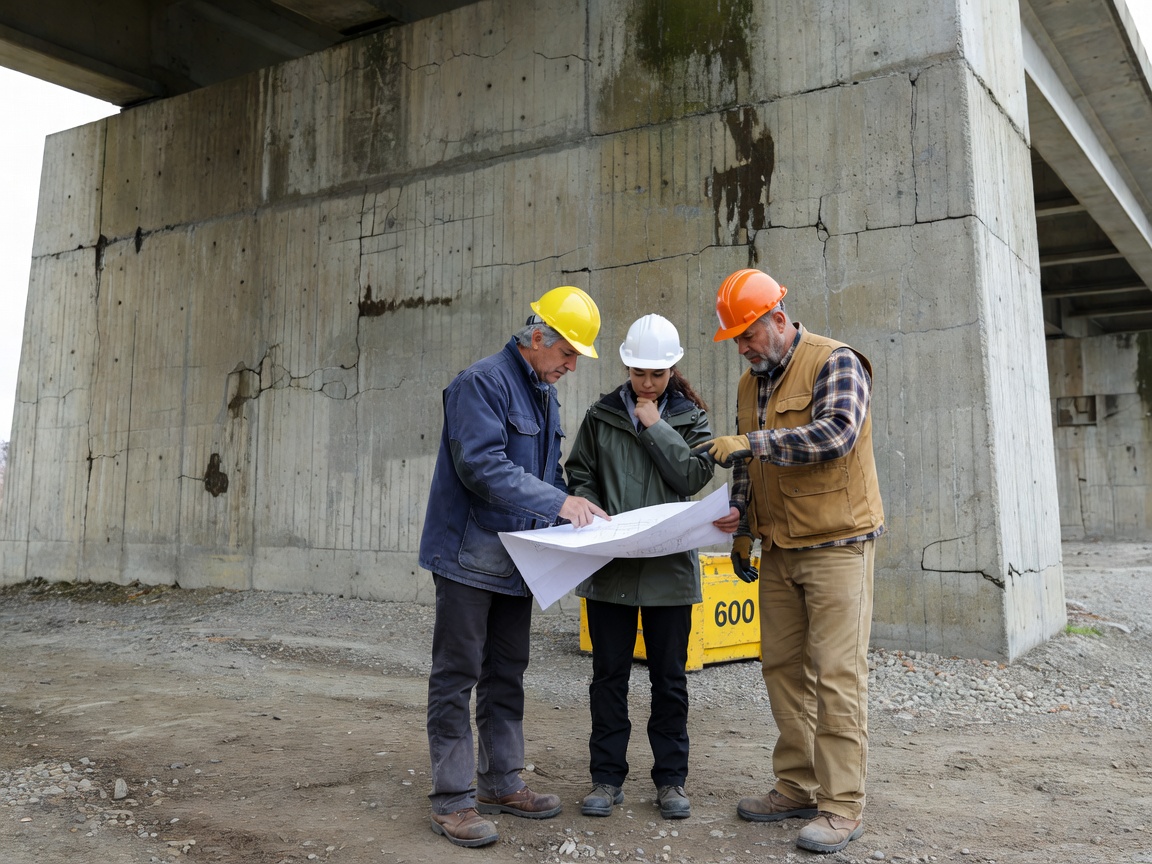
The Economic & Structural Case for Predictive Maintenance
Across Europe, the vast majority of our critical viaducts and river crossings were constructed between 1955 and 1985. These structures are now operating well into their design service lives, carrying gross vehicle weights and traffic densities far exceeding the design codes of their era. Left unmanaged, small mechanical failures trigger exponential damage curves. A ruptured €3,000 neoprene joint gland, if ignored for two winter cycles, allows deicing salts to corrode a €40,000 pot bearing, which in turn causes stress concentrations that induce €300,000 of shear cracking in the prestressed beam end.
Maintenance planning is the engineering discipline that halts this chain reaction. We develop predictive lifecycle intervention models that bundle maintenance tasks into logically synchronised packages. By synchronising deck resurfacing, waterproofing membrane renewal, expansion joint replacement, and parapet barrier upgrades into single planned corridor closures, we slash socio-economic traffic disruption costs while maximising contractor productivity.
Categorising Interventions: Routine to Structural Heavy Works
A resilient maintenance plan divides physical works into clearly delineated operational horizons:
- Routine Cyclic Maintenance (Annual): Clearing drainage scuppers, vegetation clearance around wing walls, pressure-washing deicing salt accumulation from bearing shelves, and lubricating mechanical hinge pins. Small investments here prevent major water entrapment.
- Component Replacement Programs (10–15 Year Cycle): Replacement of sacrificial elements such as expansion joint modular seals, asphaltic plug joints, elastomeric bearing pads, and approach slab transition joints before structural fatigue causes secondary superstructure damage.
- Major Structural Rehabilitation (25–35 Year Horizon): Hydro-demolition of chloride-contaminated concrete cover, installation of impressed current cathodic protection (ICCP) systems on piers, external post-tensioning strengthening, and full blast-cleaning and recoating of structural steel trusses.
- Substructure Scour Countermeasures: Placement of engineered rock riprap, gabion mattresses, or concrete grout bags around river piers subject to seasonal flood velocities.
Traditional pneumatic jackhammers introduce micro-fracturing into the sound underlying concrete substrate, weakening the bond with newly applied repair mortars. We specify ultra-high-pressure hydro-demolition (up to 2,500 bar), which selectively washes away degraded, chloride-saturated concrete, cleans exposed reinforcement without nicking steel rebar, and leaves a rugged mechanical key for optimal overlay bonding.
Synchronising Works with Corridor Capacity
A brilliant technical specification is useless if it requires closing a crucial freight corridor during peak transit months. Our planning process incorporates comprehensive traffic phasing simulations:
1. Nighttime & Weekend possessions
For rail bridges spanning double-track lines, bearing replacements or deck waterproofing can often be achieved within 54-hour continuous weekend railway possessions. We engineer temporary hydraulic jacking arrangements with synchronized manifold systems that raise bridge spans by mere millimetres under monitored loads, allowing bearing extraction without requiring rail track removal.
2. Contraflow & Phased Deck Rehabilitation
On dual-carriageway highway viaducts, we divide deck works into longitudinal phases. Traffic is diverted to one half of the crossing via median crossovers, creating an isolated, secure workzone where contractors can mill the asphalt, replace waterproofing membranes, and hydro-demolish edge beams safely behind temporary concrete barriers.
| Maintenance Class | Target Component | Typical Intervention Method | Anticipated Life Extension |
|---|---|---|---|
| Protective | Bridge Deck Slabs | Spray-applied polyurea / bitumen membrane renewal | 20 to 25 Years |
| Mechanical | Bearing Assemblies | Hydraulic deck jacking & pot/spherical bearing swap | 30 to 40 Years |
| Electrochemical | Piers in Splash Zones | Impressed Current Cathodic Protection (ICCP) | 25+ Years of corrosion arrest |
| Surface Preservation | Structural Steelwork | Dry abrasive blasting & 3-coat epoxy/polyurethane system | 20 to 30 Years to first maintenance |
| Structural Strengthening | Prestressed Box Beams | External post-tensioning carbon fibre (CFRP) bonding | Restoration to current EU axle load ratings |
Maintenance Prioritisation Matrix
When asset budgets are constrained, we apply a multi-attribute prioritisation matrix that balances:
- Structural Consequence: Is the component primary or secondary? Does it pose brittle fracture risk?
- Rate of Deterioration: Is the defect actively accelerating (e.g. wet chloride salt migration)?
- Traffic Volume & Detour Penalty: What is the economic cost of an unplanned emergency restriction vs scheduled maintenance?
- Synergy with Surrounding Capital Works: Can works be coordinated with adjacent highway resurfacing or rail electrification schedules?